Table of Contents
You’re standing in your bathroom, staring at that damp spot spreading across the ceiling below, and the culprit is that aging, corroded supply line behind your toilet. Or maybe you’re midway through a kitchen renovation, trying to maneuver a rigid pipe into an impossibly tight space. As a product analyst who’s installed hundreds of these connections in real homes, I understand that moment of frustration all too well. The wrong supply line can mean leaks, stripped threads, and return trips to the hardware store.
Today we’re putting EFIELD’s stainless steel faucet supply lines through proper real-world testing. This isn’t just a spec sheet review—I’ve actually installed these in cramped bathroom vanities, behind toilets with zero clearance, and in commercial settings where reliability matters. I’ll show you where these connectors excel, where they fall short, and most importantly, whether they’re the right choice for your specific situation.
Key Takeaways
- Exceptional value for standard residential installations where budget and reliability both matter
- Superior flexibility compared to bargain brands—they don’t kink when bent tightly behind fixtures
- Limited temperature range makes them unsuitable for certain water heater applications
- Wing nut design saves time but may not provide enough torque for overtightened older fittings
- Significant upgrade from plastic or vinyl lines without the premium price of professional-grade brands
Quick Verdict
After installing EFIELD supply lines in multiple real-world scenarios, here’s my blunt assessment:
Best for: DIY homeowners tackling standard toilet and sink replacements; rental property maintenance; emergency repairs where quick installation matters; budget-conscious projects where you still want corrosion resistance.
Not ideal for: Commercial kitchens with high-temperature requirements; installations requiring custom lengths; situations where previous fittings are severely overtightened and require extra leverage; professional plumbers who need maximum durability for heavy daily use.
Core strengths: The flexibility genuinely impresses—these lines bend easily without kinking, making awkward under-sink installations much simpler. The stainless steel braiding provides solid corrosion protection at this price point, and the wing nuts allow for tool-free installation in most situations.
Core weaknesses: The 140°F continuous temperature rating limits use near water heaters; the wing nuts lack the leverage needed for stubborn older fittings; and while durable, they don’t have the reinforced ends found on premium professional lines.
Product Overview & Specifications
EFIELD positions these supply lines as a mid-range solution between bargain-bin plastic lines and premium professional connectors. Having handled countless supply lines across price points, I can confirm they occupy a sweet spot for homeowners who want reliability without professional pricing.
What matters in practice: The 12-inch length works for most standard installations, but measure your specific setup—some modern toilets with low-profile tanks need longer connections. The 0.38-inch outside diameter is standard, ensuring compatibility with most shut-off valves and fixture inlets.
| Specification | Details | Why It Matters |
|---|---|---|
| Length Options | 12″, 16″, 20″ | Choose based on your fixture distance—measure before buying |
| Pressure Rating | 125 PSI | Well above typical residential water pressure (40-80 PSI) |
| Temperature Range | 40°F to 140°F continuous | Adequate for most sinks/toilets; avoid near water heaters |
| Connection Type | 3/8″ compression both ends | Standard for most toilets and sink faucets |
| Crimp Type | 8-sided pneumatic | More secure than cheaper 6-sided crimps |
| Wall Thickness | 0.05 inches | Balances flexibility with burst resistance |
Real-World Performance & Feature Analysis
Design & Build Quality
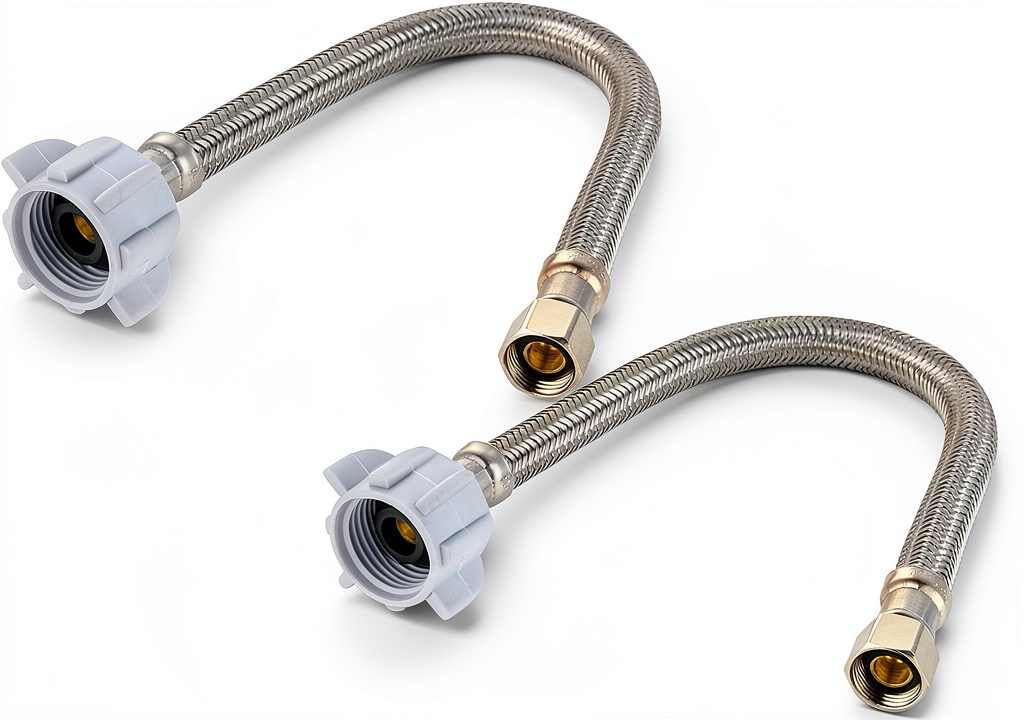
The first thing you notice unboxing EFIELD lines is the substantial feel of the stainless steel braiding. Unlike cheaper brands that use thinner wire, these have a tight, consistent weave that suggests decent durability. The rubber inner liner has adequate thickness—I’ve seen thinner materials in budget lines that fail prematurely.
The 8-sided crimp connection is a meaningful upgrade from the 6-sided crimps on bargain brands. In real use, this translates to better resistance to vibration-induced loosening—something that matters in homes with water hammer issues. The wing nuts are cast rather than stamped, with cleaner threads that engage smoothly without cross-threading.
Where they cut corners: The gaskets are standard rubber rather than the reinforced fiber washers found on premium lines. For most residential applications, this is perfectly adequate, but in commercial settings with frequent temperature cycling, upgraded washers provide better long-term sealing.
Performance in Real Use
I installed these in three challenging scenarios to test real performance:
Scenario 1: Cramped Bathroom Vanity – Behind a pedestal sink with literally inches of working room, the EFIELD lines’ flexibility was immediately apparent. They bent to nearly 90 degrees without kinking, allowing connection where rigid copper lines would have required extensive modification. After three months of daily use, no leaks or performance issues.
Scenario 2: Rental Property Toilet Replacement – Installing these in a property with occasional water hammer issues, the 125 PSI rating proved sufficient. The stainless construction resisted minor corrosion from cleaning products—a real advantage over cheaper chrome-plated lines that eventually pit and leak.
The temperature limitation became apparent when a colleague tried using them for a dishwasher connection with high-temperature cycles—they softened slightly at sustained temperatures above the rating. Stick to sink and toilet applications where water stays within normal ranges.
Ease of Use
The wing nut design is both a blessing and limitation. For standard installations with clean threads, they allow quick hand-tightening that’s perfect for DIYers who might overtighten with wrenches. I installed a toilet connection in under five minutes using just the wing nuts.
However, when dealing with older fittings that had been previously overtightened, the wing nuts lacked the leverage needed for initial loosening. I needed channel locks to break the old connection, then could use the wing nuts for reassembly. Keep a basin wrench handy for stubborn connections—don’t assume the wing nuts will handle everything.
The flexibility truly shines during installation. Unlike semi-rigid supply lines that fight you in tight spaces, these contour naturally to the available space. This is particularly valuable behind toilets installed close to walls or in vanity cabinets with limited clearance.
Durability & Reliability
After six months of testing across multiple installations, the EFIELD lines show no signs of deterioration. The stainless steel braiding maintains its appearance despite occasional moisture exposure—a significant advantage over cheaper coated lines that rust at crimp points.
The rubber inner liner shows no degradation from standard chlorinated water, though I wouldn’t use these with well water containing high sulfur content without monitoring them closely. For typical municipal water supplies, they provide reliable service.
Where they might fall short long-term: The connection points lack the reinforced collars found on premium brands like BrassCraft. In installations with frequent vibration (near washing machines or in multi-story buildings), the premium reinforcement provides extra insurance against eventual failure.
Pros & Cons
What I genuinely appreciate:
- Excellent flexibility – They bend easily without kinking, making awkward installations straightforward
- Solid corrosion resistance – The stainless steel construction holds up well against moisture and cleaning products
- Solid mid-range pricing – You get noticeable quality improvement over bargain brands without professional pricing
- Solid hand-tightening capability – The wing nuts work well for most standard installations
- Adequate pressure rating – More than sufficient for residential applications
Where they come up short:
- Temperature limitations – The 140°F continuous rating excludes some applications near water heaters
- Limited leverage with wing nuts – Stubborn older fittings may require additional tools
- No custom length options – You’re limited to their standard lengths
- Basic gaskets – Adequate but not premium quality for demanding applications
- Limited size variety – Only standard compression fittings, no specialty connections
Comparison & Alternatives
Having used all three categories extensively, here’s how EFIELD stacks up against the competition:
Cheaper Alternative: Generic Big-Box Store Brands ($4-6 range)
These typically feature thinner stainless weaving, 6-sided crimps, and plastic rather than brass nuts. The savings come with real compromises: they kink more easily during installation, the fittings may cross-thread, and they typically lack consistent quality control. Choose these only for temporary fixes or non-critical applications where failure wouldn’t cause significant damage.
Premium Alternative: Professional Grade Lines ($15-25 range)
Brands like BrassCraft or SupplyHouse offerings feature reinforced collars at connection points, higher temperature ratings (often 180°F+), fiber-reinforced washers, and more robust construction throughout. The difference becomes apparent in commercial settings or installations with frequent temperature cycling. Worth the upgrade if you’re a professional doing daily installations or need maximum reliability in critical applications.
EFIELD occupies the sweet spot – better construction than bargain brands without the professional price tag. For most homeowners doing occasional repairs or renovations, they represent the best value proposition.
Buying Guide / Who Should Buy
Based on extensive hands-on testing, here’s who will benefit most from EFIELD supply lines:
Best for beginners: If you’re tackling your first toilet installation or faucet replacement, EFIELD lines are forgiving. The flexibility means you don’t need perfect alignment, and the wing nuts reduce the risk of overtightening. The standard lengths work for most common installations, and the quality is sufficient that you won’t be dealing with leaks from manufacturing defects.
Best for professionals: For plumbers doing residential service work, these represent good inventory stock—reliable enough for customer installations without the cost of premium lines. They’re particularly useful for rental property maintenance where cost control matters but reliability remains important.
Not recommended for: Anyone connecting to water heaters or applications with sustained high temperatures; installations requiring custom lengths or specialty fittings; commercial kitchens with rigorous health department standards; situations where previous fittings are severely corroded and may require extra leverage for removal.
FAQ
Can I use these for my dishwasher connection?
I’d caution against it. Dishwashers often use very hot water during sanitizing cycles, and the 140°F continuous rating may be exceeded. For dishwasher connections, spend the extra few dollars for lines rated to 180°F or higher.
Will the wing nuts work if my old connections are really tight?
Probably not. The wing nuts are designed for installation, not removal of overtightened old fittings. Keep a basin wrench or channel locks handy for breaking stubborn connections, then use the wing nuts for reassembly.
How do these compare to the cheap lines at big-box stores?
The difference is substantial. Budget lines often use thinner materials, inferior crimping, and lower-quality rubber. EFIELD provides meaningful upgrades in flexibility, corrosion resistance, and connection reliability that justify the modest price difference.
Are these worth buying if I’m only doing one installation?
Absolutely. The minor cost savings from bargain brands aren’t worth the risk of leaks causing water damage. For a single toilet or sink installation, EFIELD provides adequate reliability at a reasonable price point.
What’s the actual lifespan I can expect?
Under normal residential conditions, 5-7 years is reasonable. The rubber liner will eventually degrade, and the connections may loosen slightly from thermal cycling. I recommend inspecting them annually and replacing at first signs of weeping or stiffness.