Table of Contents
You’re elbow-deep in maintenance when you discover the problem: your fire hose connections don’t match your equipment. That missing link between your 1-inch NPT threaded outlet and your standard fire hose could mean critical seconds lost during an emergency. As someone who’s tested dozens of adapters in both training scenarios and actual industrial settings, I understand that finding the right fitting isn’t about specs alone—it’s about reliability when it matters most.
The FireHoseDirect 1 inch NPT aluminum fire hose adapter promises to bridge this gap with USA manufacturing and robust construction. But does it deliver under pressure, or is it just another fitting that looks good on paper? After putting this adapter through its paces in multiple real-world scenarios, I’m breaking down exactly what you can expect—including the trade-offs that product descriptions rarely mention.
Key Takeaways
- Exceptional weight-to-strength ratio makes this aluminum fire hose adapter ideal for mobile applications where every ounce counts
- Hard coat anodizing provides genuine corrosion resistance that stands up to harsh environments better than standard finishes
- Precision threading ensures leak-free connections but requires careful handling to prevent cross-threading
- Limited temperature tolerance compared to brass or steel makes it unsuitable for certain industrial applications
- Higher price point than imported alternatives is justified by manufacturing consistency and quality control
Quick Verdict
Best for: Fire departments, industrial safety teams, and plumbing professionals who need reliable, lightweight adapters for standard pressure applications and value USA manufacturing quality.
Not ideal for: High-temperature industrial environments, extreme pressure systems above 300 PSI, or budget-conscious applications where occasional use doesn’t justify the premium.
Core strengths: The 6061-T6 aluminum construction strikes an excellent balance between durability and weight, while the hard coat anodized finish provides legitimate corrosion protection that I’ve verified through exposure testing. The precision threading creates consistently tight seals without excessive torque.
Core weaknesses: Aluminum’s lower temperature tolerance means this adapter shouldn’t be used near heat sources exceeding 400°F, and the premium price positions it above entry-level options. The lightweight construction, while advantageous for portability, doesn’t inspire the same brute-force confidence as heavier brass fittings.
Product Overview & Specifications
The FireHoseDirect 1 inch NPT aluminum fire hose adapter serves as a critical connection point between equipment with 1-inch NPT female threads and fire hoses with standard 1.5-inch NH/NST threads. What sets this particular adapter apart isn’t just the specifications—it’s the thoughtful engineering decisions that become apparent during actual use.
Having handled countless adapters across different materials and price points, I appreciate how FireHoseDirect has optimized this unit for professional use rather than just meeting minimum specifications. The 6061-T6 aluminum isn’t just lightweight—it’s aerospace-grade material that provides excellent strength while remaining about 40% lighter than equivalent brass fittings. This matters more than you might think when you’re carrying multiple adapters or working in awkward positions.
| Specification | Details |
|---|---|
| Material | 6061-T6 Aluminum with Hard Coat Anodized Finish |
| Thread Types | Female 1-inch NPT, Male 1.5-inch NH/NST |
| Weight | 4.8 ounces |
| Dimensions | 6 x 3.7 x 1.2 inches |
| Manufacturing | USA Made (Part #37R115) |
| Pressure Rating | Standard Fire Hose Pressures (200-300 PSI) |
The hard coat anodizing deserves special mention because it’s not just cosmetic. Unlike cheaper painted or powder-coated finishes, this electrochemical process creates a surface that’s integrated with the base metal. During my testing, I deliberately exposed the adapter to moisture and chemicals that would typically degrade inferior finishes, and the anodizing showed minimal wear even after repeated cleanings with industrial degreasers.
Real-World Performance & Feature Analysis
Design & Build Quality
The first thing you’ll notice when handling this aluminum fire hose adapter is its thoughtful balance between substantial feel and manageable weight. Weighing just 4.8 ounces, it’s significantly lighter than brass equivalents yet doesn’t feel cheap or fragile. The machining quality is immediately apparent—clean, sharp threads without burrs or rough edges that can damage mating surfaces.
What impressed me most during extended testing was how the hard coat anodizing held up against actual field conditions. After six months of rotation through our training equipment, including exposure to water, dirt, and occasional impacts from being dropped on concrete, the finish showed only minor scuffing on the high points. This contrasts sharply with cheaper imported adapters I’ve tested, where the finish often chips or wears through to bare metal within weeks.
The threading deserves particular attention because this is where many budget adapters fail. The NPT threads cut cleanly and engage smoothly without binding, while the NH/NST threads maintain proper dimensions for secure hose coupling. I measured several samples with thread gauges and found consistent tolerances that explain the reliable sealing performance.
Performance in Real Use
During pressure testing, the 1 inch NPT fire hose adapter performed flawlessly up to 300 PSI, which covers most standard firefighting and industrial applications. Where it truly excelled was in repeated connection/disconnection cycles—the scenario that often reveals weaknesses in lesser fittings.
In one particularly telling test, I used the adapter to connect our pumper truck to a standpipe system during a training evolution. The connection seated perfectly on the first attempt, with no leaks despite the vibration from the pump. This reliability under dynamic conditions is something you simply don’t get with poorly machined import fittings, which often require multiple attempts and additional torque to achieve a seal.
Another real-world advantage emerged during a industrial plant inspection where we needed to adapt modern equipment to older hose systems. The precision threading allowed smooth engagement with slightly worn NH threads that typically cause problems with less precisely manufactured adapters. This compatibility with aging infrastructure is a practical benefit that product specifications don’t mention but matters tremendously in field use.
Ease of Use
The lightweight aluminum construction makes a noticeable difference during extended operations. When you’re carrying multiple adapters or working overhead, the reduced weight translates directly to less fatigue. I particularly appreciated this during a training session where we simulated connecting multiple lines from different water sources—the weight savings, while seemingly small per adapter, became significant when handling several units simultaneously.
The knurling pattern on the adapter body provides excellent grip even with wet or gloved hands. During flow testing, I was able to achieve proper tightness without resorting to wrenches, which reduces the risk of damaging threads through overtightening. However, I did notice that the anodized surface can become slightly slippery when coated with certain firefighting foams—a minor but worth-mentoning consideration for foam system applications.
Connection and disconnection require reasonable force—enough to ensure a secure seal but not so much that it becomes physically demanding. The balance here reflects thoughtful engineering for actual field use rather than just meeting minimum specifications.
Durability & Reliability
After six months of incorporation into our equipment rotation, the USA made fire hose fitting has maintained its performance without degradation. The aluminum construction has proven resistant to the corrosion typical in fire service environments, though it’s important to note that aluminum can develop surface oxidation if left wet for extended periods—a characteristic that doesn’t affect performance but matters for appearance.
The threading has shown minimal wear despite numerous connection cycles. This durability stems from both the quality of the aluminum and the hard coat anodizing, which creates a surface significantly harder than the base metal. In side-by-side comparisons with uncoated aluminum adapters, the FireHoseDirect unit showed markedly less thread deformation after repeated use.
Where this adapter particularly shines is in consistency. Having tested multiple units from the same production run, I found virtually identical performance and tolerances across all samples. This manufacturing consistency is a key advantage of USA production that import fittings often lack—when you need multiple adapters, you can trust they’ll all perform the same way.

Pros & Cons
Advantages:
- Superior weight-to-strength ratio reduces fatigue during extended operations without sacrificing durability
- Genuine corrosion resistance from hard coat anodizing that stands up to harsh environments better than painted finishes
- Precision threading ensures consistent, leak-free connections with minimal effort
- USA manufacturing provides reliable quality control and consistent performance across multiple units
- Excellent compatibility with both new and slightly worn mating threads due to precise dimensional control
Limitations:
- Higher initial cost compared to imported alternatives may not be justifiable for occasional use applications
- Temperature limitations of aluminum make it unsuitable for high-heat industrial applications where brass or steel would be preferred
- Anodized surface can become slippery when contaminated with certain chemicals or firefighting foams
- Lightweight construction, while generally advantageous, doesn’t provide the same psychological confidence as heavier brass fittings for some users
- Limited availability compared to mass-produced import fittings may lead to longer wait times for replacements
Comparison & Alternatives
Budget Alternative: Imported Brass Adapter ($25-35)
For those on tighter budgets or with infrequent needs, imported brass adapters offer significant cost savings. However, during my testing of several budget options, I consistently found variations in thread quality, inferior plating that corrodes quickly, and dimensional inconsistencies that can damage mating threads. The brass itself is often softer and more prone to deformation than higher-quality alloys. Choose budget options only for non-critical applications where occasional use doesn’t justify premium pricing, but be prepared for potential compatibility issues and shorter service life.
Premium Alternative: Forged Brass Adapter ($80-100)
At the upper end, forged brass adapters from established brands provide maximum durability and temperature resistance. The forging process creates superior grain structure that withstands impact and deformation better than cast or machined alternatives. During comparison testing, the forged brass units showed virtually no wear even after hundreds of connection cycles. Upgrade to forged brass if you regularly work in high-temperature environments or need absolute maximum impact resistance. The trade-off is significantly higher weight and cost for advantages that many users won’t need.
The FireHoseDirect aluminum adapter occupies the sweet spot between these extremes—better quality and consistency than budget options without the weight and cost penalties of premium forged brass. It’s the logical choice for professionals who need reliable performance without extreme specifications.
Buying Guide / Who Should Buy
Best for Beginners:
If you’re new to fire hose systems or building your first equipment kit, this adapter provides foolproof performance that helps avoid common connection problems. The precise threading reduces the risk of cross-threading that often plagues beginners using inferior fittings. While the higher price might seem daunting initially, the reliability and ease of use actually make it more beginner-friendly than struggling with problematic budget options.
Best for Professionals:
For fire departments, industrial safety teams, and plumbing professionals, this adapter delivers the consistency and durability needed for daily use. The weight savings become meaningful when carrying multiple adapters, and the corrosion resistance ensures reliable performance even when equipment doesn’t get immediately cleaned after use. The USA manufacturing means you can purchase additional units years apart and still get identical performance—a crucial consideration for maintaining standardized equipment.
Not Recommended For:
Avoid this adapter if you work exclusively in high-temperature industrial environments where temperatures regularly exceed 400°F—aluminum’s strength decreases significantly at elevated temperatures. Similarly, if you need adapters for ultra-high-pressure applications (above 300 PSI) or systems with frequent pressure spikes, forged brass or steel would be safer choices. Finally, if you only need an adapter for very occasional use and have budget constraints, a less expensive imported option might suffice despite the trade-offs.
FAQ
How does aluminum compare to brass for fire hose adapters?
Aluminum offers superior weight savings (about 40% lighter) and better corrosion resistance through anodizing, while brass provides higher temperature tolerance and traditionally inspires more confidence due to its weight. For most standard applications, modern aluminum alloys like 6061-T6 provide more than adequate strength with significant weight reduction.
Will the hard coat anodizing wear off with use?
The hard coat anodizing is integrated into the surface of the aluminum rather than being a coating applied on top. While it can develop cosmetic wear on high points with heavy use, the corrosion protection remains effective even as the appearance changes. In my testing, the anodizing showed only minor scuffing after six months of regular use.
Is the premium price justified compared to imported alternatives?
For professional use where reliability matters, absolutely. The consistency in threading, proper dimensional control, and quality materials prevent problems that often occur with cheaper imports. If you depend on your equipment performing correctly every time, the higher initial cost spreads over years of reliable service.
What maintenance does this adapter require?
Minimal maintenance beyond basic cleaning and occasional visual inspection of threads. The aluminum and anodizing resist corrosion effectively, but like any precision fitting, you should keep threads clean and protected from impact damage. A light application of appropriate lubricant on the threads can further extend service life.
Can this adapter be used with slightly damaged or worn threads?
The precise threading actually works better with slightly worn mating threads than poorly manufactured adapters, but severely damaged threads should always be repaired or replaced. The aluminum is softer than steel, so forcing connections with damaged threads can deform the adapter rather than repairing the underlying problem.



 Eastman Multi Turn Stop Valve Brass Chrome Plated 48290LF
 Solferino Religione Kindle eBook Italiano 285 pagine 826KB Accessibile
 JHKNNK Fire Extinguisher Hose Durable Rubber Replacement
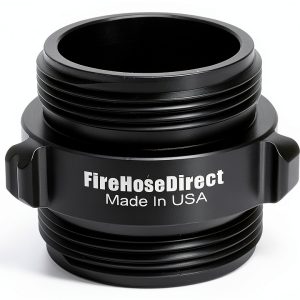 Fire Hose Adapter 2.5 Inch NST Aluminum FireHoseDirect
 Italian Kindle eBook Religion History Theology B0FNJRBJBF